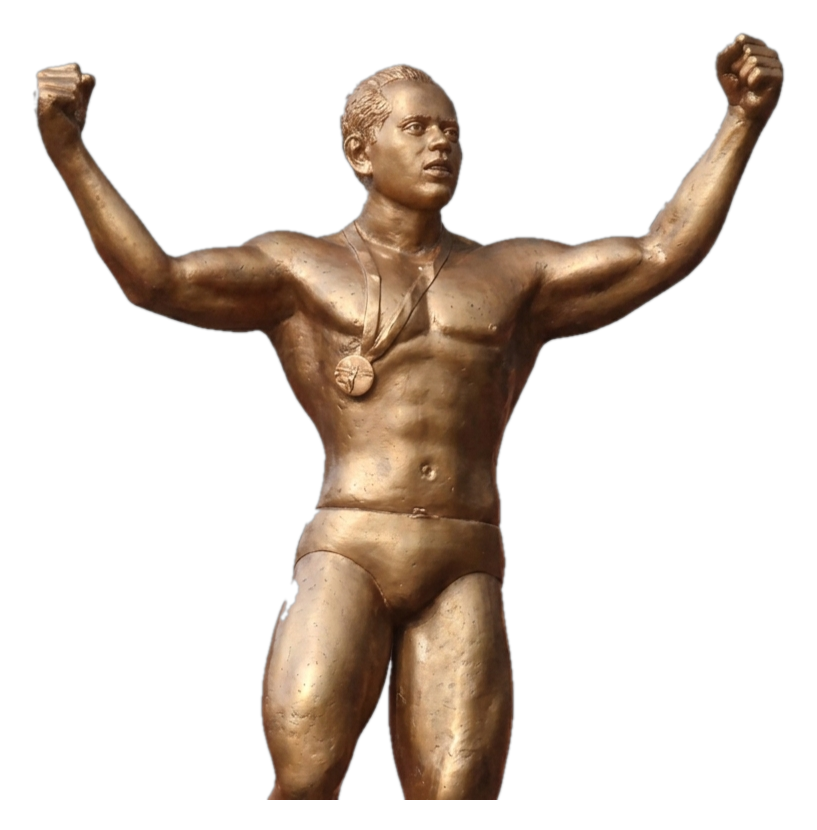
Chapter One · 1925 – 1947
Early Life & Goleshwar
A household that lived and breathed wrestling, a village on the Krishna, and a boy everyone thought was too small.
Khashaba Dadasaheb Jadhav was born on 15 January 1925 in Goleshwar, a village in the Karad taluka of Satara district, in what was then the Bombay Presidency of British India. He was the youngest of the five sons of Dadasaheb Jadhav — himself a wrestler of considerable local renown — in a household that, as one account puts it, lived and breathed wrestling.
A region where wrestling was royal
Western Maharashtra in the 1920s and 30s was one of the great wrestling heartlands of the subcontinent. The nearby princely state of Kolhapur had made a deliberate project of the sport: its rulers patronised akhadas (traditional wrestling gymnasiums), maintained wrestlers on stipend, and staged tournaments that drew competitors from across India. To be a promising boy wrestler in Satara district was to be inside a living system of coaching, competition and patronage — one of the few structures in colonial India that could actually carry a rural athlete upward.
This mattered enormously, and it is the reason Khashaba's later story is so poignant. The system that made him was dismantled almost exactly when he needed it most.
The akhada
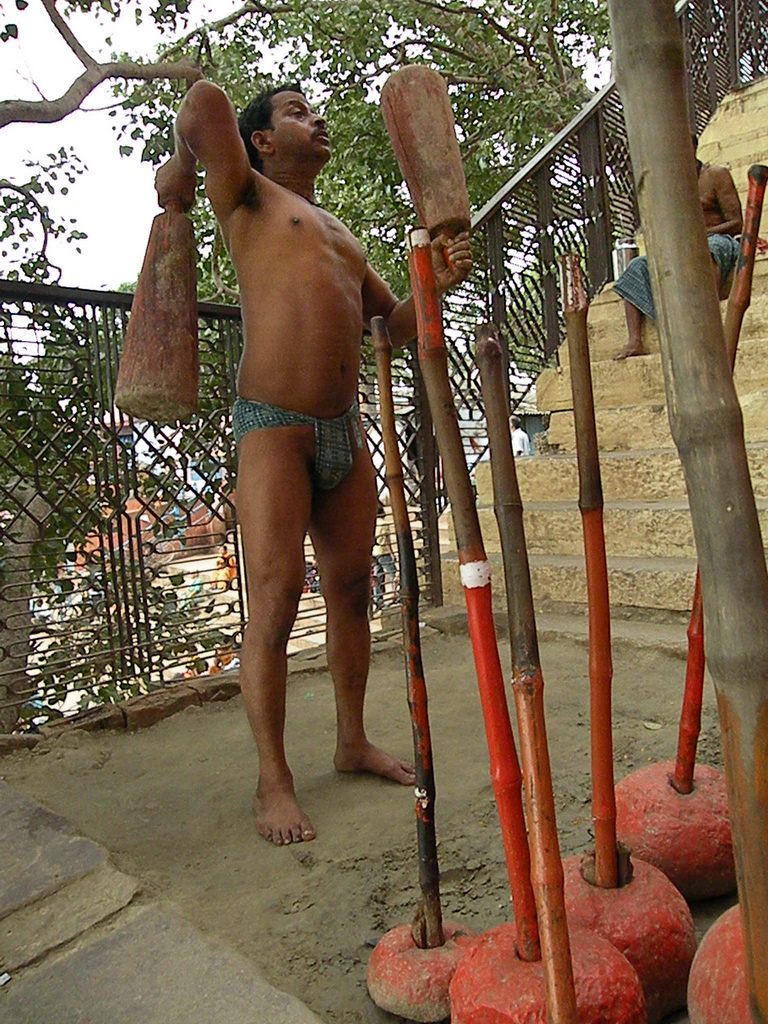
Khashaba entered the akhada young — accounts place him at the practice pit somewhere between the ages of eight and ten, learning under his father. Traditional Indian kusti is fought not on a mat but on prepared earth: red soil turned, watered and worked until it is soft enough to fall on. The training that goes with it is famously severe — thousands of dands and bethaks (Indian push-ups and squats), rope climbing, and hours of grappling.
Small, fast, and technical
He was small. As an adult he stood about 5 ft 6 in and wrestled at roughly 54 kg. In a sport that prizes mass, this should have been disqualifying. Instead it forced him to become a technician: he built his wrestling around speed, balance and timing rather than strength, and became known for the dhak — a technique in which the wrestler seizes his opponent in a headlock and slings him bodily to the ground. Executed well against a heavier man, it turns the opponent's own weight into the instrument of his defeat.
In village competition he built a reputation as a giant-killer, throwing men well outside his own weight. The press would later christen him the “Pocket Dynamo.”
Beyond the pit
Wrestling was his signature, but not his only sport. Family accounts describe a boy who also excelled at weightlifting, swimming, running, malkhamb and the hammer throw — the well-rounded athleticism a serious akhada upbringing was built to produce.
“Too weak for the team”
He attended Tilak High School in Karad from 1940 to 1947, and later Rajaram College in Kolhapur, where he went on to complete a BA and an LLB. The story that follows him from those years — repeated in nearly every account of his life — is that a sports teacher looked at his frame and judged him too weak to represent the college at wrestling.
Khashaba went over his head and appealed directly to the principal, asking only for a chance to compete for the place. He got it, and beat everyone he was put in front of.
It is a small anecdote, and it establishes the pattern of his entire career: consistently underestimated by the people with the authority to select him, and consistently unanswerable once actually allowed onto the mat. He would face the same problem, with far higher stakes, before the 1952 Games.
A national reputation
By his early twenties Khashaba was competing well beyond his district. In 1948 he defeated the reigning national flyweight champion, Niranjan Das of Bengal, at Lucknow — a decisive result that earned him selection for India's team to the London Olympic Games. He was 22 years old, and he had never wrestled on a mat.